

Nanoparticle drug combo treats venous malformations
Venous malformations are abnormally shaped veins that develop when the cells lining the blood vessels grow too fast when they aren’t supposed to. Children can be born with them, and as the child grows, the venous malformations can get bigger. Venous malformations are a type of vascular malformation that can range from small and superficial ... Read More about Nanoparticle drug combo treats venous malformations

Mapping ‘neighborhoods’ in aggressive childhood brain tumors
The third-most common kind of childhood brain tumor, supratentorial ependymoma, is an aggressive cancer that often returns after surgery and radiation therapy. By learning more about the makeup of these tumors, Boston Children’s researchers hope to better understand how to treat them and prevent recurrence. In a new study published in Nature, and led by ... Read More about Mapping ‘neighborhoods’ in aggressive childhood brain tumors
Gene therapy for hearing loss: Tag-teaming from the lab to the clinic
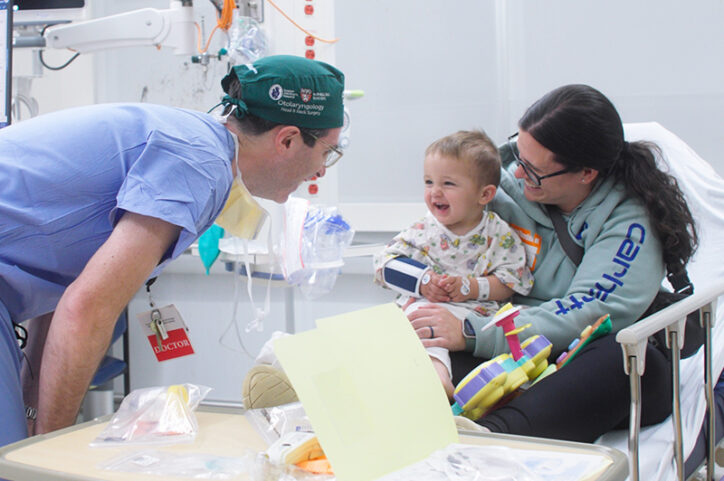
Two-year-old Miles is one of the first patients with hereditary hearing loss to receive gene therapy at Boston Children’s Hospital — to striking effect. In May 2025, Miles received an injection delivering a healthy copy of a gene called OTOF into the cochlea of his inner ear. Now, Miles is thriving. He’s had no adverse ... Read More about Gene therapy for hearing loss: Tag-teaming from the lab to the clinic
The journey to a treatment for hereditary spastic paraplegia
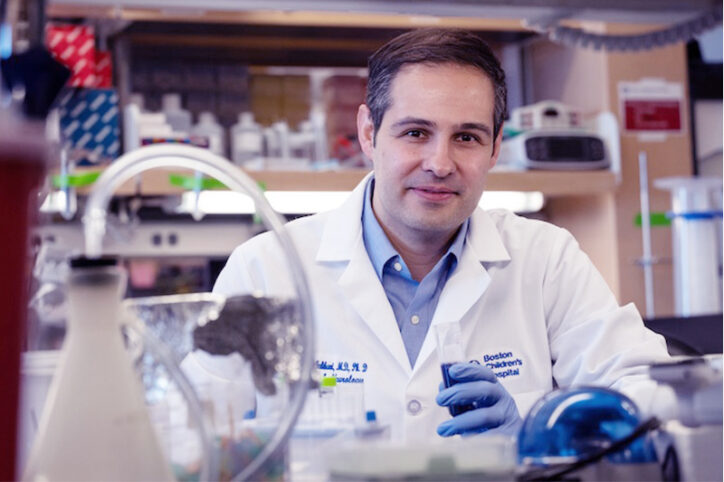
In 2016, Darius Ebrahimi-Fakhari, MD, PhD, then a neurology fellow at Boston Children’s Hospital, met two little girls with spasticity and decreased muscle tone in their legs, which affected their walking. Both girls, Robbie Edwards and Molly Duffy, had been diagnosed with hereditary spastic paraplegia (HSP), which comprises a group of more than 80 genetic ... Read More about The journey to a treatment for hereditary spastic paraplegia

A toast to BRD4: How acidity changes the immune response
It started with wine. Or more precisely, a conversation about it. “My colleagues and I were talking about how some people think drinking wine may be anti-inflammatory,” recalls Xu Zhou, PhD, from the Division of Gastroenterology, Hepatology, and Nutrition at Boston Children’s Hospital. “There’s no scientific ground for that, but we know wine is acidic.” ... Read More about A toast to BRD4: How acidity changes the immune response
A safe, pain-specific anesthetic shows preclinical promise
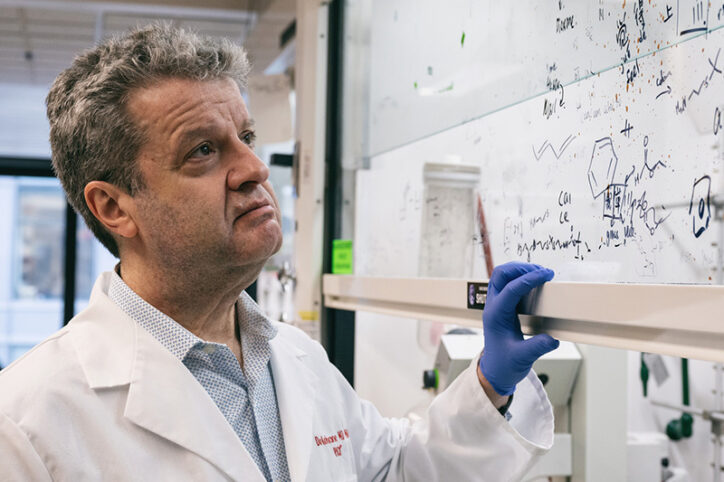
All current local anesthetics block sensory signals — pain — but they also interrupt motor signals, which can be problematic. For example, too much epidural anesthesia can prevent mothers in labor from being able to push. Prolonged local anesthesia after orthopedic surgery can leave patients unable to participate in rehab. Researchers at Boston Children’s Hospital ... Read More about A safe, pain-specific anesthetic shows preclinical promise